Sunday, September 11, 2011
Remembering 9-11
Watching the 9-11 Commemorations this morning has brought out strong emotions. I responded to Washington DC the next day to work on an Incident Command Team out of the Dept. of the Interior Building. The hotel we stayed at looked directly down on the still fresh hole in the Pentagon. I remember seeing fear and disbelief in the faces of those few people walking around the deserted ghost town of the Mall. We have to remember that at that time no one knew that more attacks would not occur. During that time I also witnessed the strength and resilience of our Nation and its people. Today let us remember those heroes that we lost during these attacks and those who have paid the price since, both our brave military and the first responders who continue to deal with health issues and the loss of their comrades as the consequence of doing their duty.


Sunday, September 4, 2011
Affects of Further Cuts to National Park Budgets
Check out this article from the Great Falls Tribune on the affects of budget cuts on our National Parks.
http://www.greatfallstribune.com/article/20110904/BUSINESS/109040305/Funding-staff-shortages-threaten-national-parks?odyssey=tab|topnews|text|Frontpage
This article is of interest since it outlines some of the ideas of how to reduce the number of National Parks in our system including turning some over to states and others to non-profit organizations. I have quite a few concerns about such proposals. But here are some of my key ones.
National Park areas are created by Congress and in some cases by the President (National Monuments) because they have been determined to have some cultural or natural significance to our Nation and its people. So how would it be determined which of these areas now do not have this level of significance.
What states have the funding available to take over a park. From what I am hearing in the news most states are in dire financial situations unable to fund schools, infrastructure, and public safety. Most states would most likely apply for Federal funding to care for such an area anyway. Putting a park under the responsibility of a state government at this time could spell its demise or death.
I have recently entered the world of non-profits. As managing director of a nature center and arboretum I am attempting to deal with the lack of funding available from grants and donations, the life blood of any non-profit. Between the down turn in the economy and cuts to Federal programs there is more competition than ever between many worthy causes for limited dollars. Individual contributors and foundations are cutting back on established grants and not accepting new applications due to losses in the stock market and their donor base. Federal grant programs are being shut down. Grants and donations from private industry are being vastly reduced as profits and investments drop. Families with the increases in gas and grocery prices can ill afford to support local non-profits.
If you were to look back at the history of some historic sites within the National Park System you would find quite a few that were formally state parks or run by non-profits. These sites were transferred to the National Park Service because they could no longer be financially sustained, were sites of National significance, and could contribute to boosting local economies.
With our current economic conditions I see these quick fix politically motivated solutions contributing to the fall of one of our Country's best ideas and the best park system in the world.
The Great Falls Tribune article quotes Tom Kiernan, President of the National Parks and Conservation Association as saying, "Every $1 invested in them (National Parks), ..... generates $4 of economic activity in return." Yes we all have to tighten out belts, but removing parks from a system that feeds local economies may prove destructive in the end.
http://www.greatfallstribune.com/article/20110904/BUSINESS/109040305/Funding-staff-shortages-threaten-national-parks?odyssey=tab|topnews|text|Frontpage
This article is of interest since it outlines some of the ideas of how to reduce the number of National Parks in our system including turning some over to states and others to non-profit organizations. I have quite a few concerns about such proposals. But here are some of my key ones.
National Park areas are created by Congress and in some cases by the President (National Monuments) because they have been determined to have some cultural or natural significance to our Nation and its people. So how would it be determined which of these areas now do not have this level of significance.
What states have the funding available to take over a park. From what I am hearing in the news most states are in dire financial situations unable to fund schools, infrastructure, and public safety. Most states would most likely apply for Federal funding to care for such an area anyway. Putting a park under the responsibility of a state government at this time could spell its demise or death.
I have recently entered the world of non-profits. As managing director of a nature center and arboretum I am attempting to deal with the lack of funding available from grants and donations, the life blood of any non-profit. Between the down turn in the economy and cuts to Federal programs there is more competition than ever between many worthy causes for limited dollars. Individual contributors and foundations are cutting back on established grants and not accepting new applications due to losses in the stock market and their donor base. Federal grant programs are being shut down. Grants and donations from private industry are being vastly reduced as profits and investments drop. Families with the increases in gas and grocery prices can ill afford to support local non-profits.
If you were to look back at the history of some historic sites within the National Park System you would find quite a few that were formally state parks or run by non-profits. These sites were transferred to the National Park Service because they could no longer be financially sustained, were sites of National significance, and could contribute to boosting local economies.
With our current economic conditions I see these quick fix politically motivated solutions contributing to the fall of one of our Country's best ideas and the best park system in the world.
The Great Falls Tribune article quotes Tom Kiernan, President of the National Parks and Conservation Association as saying, "Every $1 invested in them (National Parks), ..... generates $4 of economic activity in return." Yes we all have to tighten out belts, but removing parks from a system that feeds local economies may prove destructive in the end.
Friday, September 2, 2011
Illegal Trails On the Blue Ridge Parkway
The Blue Ridge Parkway winds through over 469 miles of
mountain scenery and habitats in Virginia and North Carolina. When originally built this road was in what
many would consider the middle of nowhere providing access for new populations
to experience Southern Appalachian natural and cultural environments. In many cases visitors fell in love with the
region and its charms. As a result the number
of homes and communities along the edges of the Park has grown. Over time many adjacent home and property
owners have wanted their own piece of the Blue Ridge Parkway. The National Park Service has identified
approximately 400 illegally built trails within the park providing access to
the Parkway road. More than 40 of these
trails exist in the Roanoke area alone and are being used by pedestrians and
bicyclists.
Most users of these trails do not see any problem with
cutting trees and brush and in some cases constructing steps on park lands
since it makes it personally convenient for them to gain access to the park
from their home. In some other areas
trees have been topped and even removed within the park to open up views for home
owners. I have even seen these accesses
and views used as an enticement for real estate sales.
Approximately five years ago the Park Service attempted to
close off several of the illegally cut trails in the Roanoke area. People immediately started contacting their
Congressional representatives, local politicians, and the news media to paint a
dark picture of evil park rangers stopping their fun. As a result the Blue Ridge Parkway has spent
several years studying the situation and developing a proposed trail management
plan for the Roanoke area of the Park. A lot of time, expense, and effort have been
spent by the Park Service just in planning to deal with this problem.
Granted my opinion is tainted by more than 32 years as a
park ranger dealing with many similar issues.
I guess the points I keep coming back to are these:
The trails were built illegally in violation of federal regulations
without permission from the Park Service.
Were the park staff to build such a trail there are numerous
requirements for cultural and natural resource impact studies to be completed
and approved to ensure such construction does not damage valuable or irreplaceable
plants, habitats, or archeological sites.
Considerations are required as to the safety of the trail and its access
point into the roadway. None of the
builders of these trails went through this process or even considered such
impacts on public lands.
The construction of the trails impacted resources that the
Park Service is charged with protecting.
Cutting limbs, trees, and shrubbery are all violations of regulations
within National Parks. Many of these
trails also cause eventual issues with erosion of sparse and valuable soils in
mountain areas. This erosion further
damages root systems of other plants and trees adjacent to the trails.
The placing of these trails and the reaction of the public
to attempts to close them are examples of how many have become more interested
in what can benefit them as an individual than on how their actions will affect
others.
It would be interesting to see what the reaction would be
from these neighboring land owners if someone came onto their property without permission
and started cutting vegetation to open a short cut to another house.
http://www.wdbj7.com/news/wdbj7-dozens-worry-their-favorite-trails-leading-to-the-blue-ridge-parkway-could-be-closed-20110901,0,1185373.story#tugs_story_display
http://www.wdbj7.com/news/wdbj7-dozens-worry-their-favorite-trails-leading-to-the-blue-ridge-parkway-could-be-closed-20110901,0,1185373.story#tugs_story_display
Thursday, August 25, 2011
Happy Birthday National Park Service
Today, August 25, is the birthday for the National Park Service. Although the first National Park, Yellowstone, was established in 1872 it was not until 1916 that the National Park Service was established to manage the growing park system.
2016 will mark the 100th Anniversary of the National Park Service with planning starting to celebrate this milestone.
http://www.nationalparkservice.org/
2016 will mark the 100th Anniversary of the National Park Service with planning starting to celebrate this milestone.
http://www.nationalparkservice.org/
Sunday, August 21, 2011
A Park Ranger Comes Out Of Retirement
As many of you who follow this blog may have noted, my posts
have slowed down significantly during the past two months. I have not lost interest or inspiration to
share my thoughts and experiences.
Since retiring from the National Park Service I have at times felt a
sense of loss not waking up in the morning being a part of an organization with
a mission that I felt passionate about.
I have found a source to help fill that need while allowing me to give
back to our community.
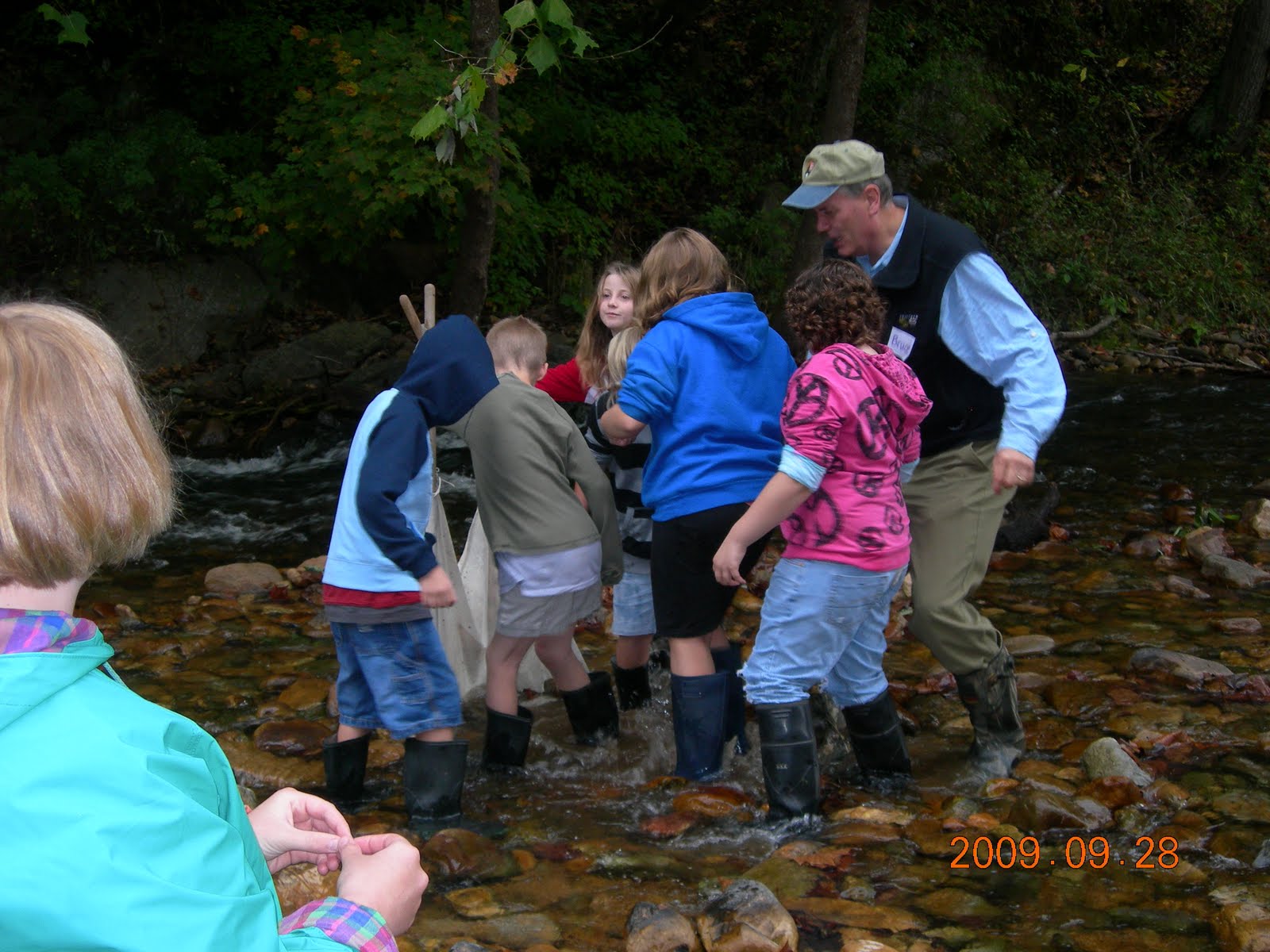
Since retirement I have been volunteering at the Boxerwood
Nature Center and Woodland Garden in Lexington, Virginia. For more than two years I helped with
facilitating environmental education programs for elementary and middle school
students. I was impressed with the
organization and content of these lessons which are tied directly to the State
of Virginia’s Standards of Learning (SOL’s) and the experiential presentations
that allowed students to connect their classroom learning with the real world
of nature. During these two years I have
seen the magic and the direct link of young students becoming interested in
science and the outdoors. I hope someday
that this seed of curiosity and awareness develop into support of our park
systems. The pay off for me was the
feeling of connection to the interests and enthusiasm that led me to the start
of my National Park Service career so many years ago.

A year ago I advanced my involvement at Boxerwood by becoming a member
of their Board of Trustees. More recently
I have stepped up that commitment again by accepting the job as Managing
Director for the Boxerwood Education Association. In this position I am responsible for the
administrative and financial health of the organization in addition to the
management of the facilities and grounds including a woodland garden. You can learn more about Boxerwood if you
visit the web site at;
You can also view an article about my new job in the Rockbridge Weekly newspaper at:
My time dedicated to writing may be challenged for at least
a while, but I hope to keep this blog going with points of interest as to the
career of being a Park Ranger, our National Parks, and answering any questions
posed by readers. If you should have a question or topic of interest you wish to hear about, I can be reached at:
And if ever in the area of Lexington, Virginia stop by at Boxerwood Nature Center and say hi.
More On Risk Takers And The Risks in the NY Times
Check out this article in the New York Times about the
increase in deaths this year at Yosemite National Park. So far sixteen people have died in the park
since January.
I am confident that this increase in injuries and deaths is in
part due to visitors’ false sense of security that someone, in most cases a
park ranger, will bail them out before a situation becomes too dangerous. As we can see that does not always work and
people need to realize, as we used to teach in Wildland fire training, the
individual is ultimately responsible for their own safety. The challenge is how to get this message to
take hold in the populace that visits our parks from all over the world.
Wednesday, August 3, 2011
Waivers for Risk Takers In National Parks
From a
reader:
I enjoy your blog and would like to
read your take on an issue. I just read an opinion piece in the LA Times
which posed the question "Should hikers be required to sign a waiver form
in National Parks". ( http://latimesblogs.latimes.com/lanow/2011/08/14th-death-in-yosemite-this-year-prompts-concerns-from-rangers.html)
For context of the opining piece: there have been 14 death in Yosemite this year. I would add that in my local news there were 2 hikers stranded on Angel's Landing (I know there have been a number of fatal falls in recent years) in Zion this past week and every year people get injured and killed in the slot canyons due to flash floods. I'm sure that you know of other NP's were people have made poor choices on dangerous hikes which have cost them their live.
Personally I think it's a great idea - or at least a good idea for certain hiking/climbing trails. People don't read the signs and climb over railings, but I think if they have to sign a legal document they might curb their stupidity and/or be more cautious in their activities in the park.
For context of the opining piece: there have been 14 death in Yosemite this year. I would add that in my local news there were 2 hikers stranded on Angel's Landing (I know there have been a number of fatal falls in recent years) in Zion this past week and every year people get injured and killed in the slot canyons due to flash floods. I'm sure that you know of other NP's were people have made poor choices on dangerous hikes which have cost them their live.
Personally I think it's a great idea - or at least a good idea for certain hiking/climbing trails. People don't read the signs and climb over railings, but I think if they have to sign a legal document they might curb their stupidity and/or be more cautious in their activities in the park.
Since I started my career with the National Park Service
in 1975 this issue has come up numerous times.
This dialog is often generated by facts such as; in 2008 there were more
than 3,500 search and rescue operations in National Parks at a cost of $4.8
million dollars (http://www.nationalparkstraveler.com/2010/08/search-and-rescue-ops-cost-national-park-service-48-million-20086495).
It has been my experience that visitors to National Parks
have a false sense of security because they believe that when they get in
trouble a Park Ranger will miraculously arrive at the scene to rescue
them. This sense of euphoria contributes
to poor decision making when facing challenging situations. The consequences can result in being lost,
injured, and in extreme cases death.
In addition to the obvious monetary and time cost of
search and rescue operations, there are also the risks taken by
responders. Park employees, cooperating
agency personnel, and volunteers often risk serious injury and death to save
the lives of victims of their own dangerous decision making.

Exhausted searchers from another all night operation on the Blue Ridge Parkway
Suggestions have been made to have people involved in
high risk activities, hiking in dangerous areas of a park, and even persons who
are at risk due to violating regulations pay for search and rescue operations
resulting from their actions. It has been
further proposed to have individuals planning high risk activities sign legal
waivers so the National Park Service would not have to initiate search and
rescue operations should they get in trouble.
In my opinion and experience there are several factors
that would not make this practice affective.
An individual cannot release the National Park Service
from its legal responsibility to protect persons visiting parks. This is one of the main reasons that Congress
and the courts have not been a supporter of the Park Service recovering costs
for search, rescue, emergency medical, and investigative costs.
On a practical level;, even if an individual signs a
waiver that states the Park Service does not have to come find them if they get
lost or injured, their parents, family, and loved ones did not. Many times emergency operations are initiated
at the frantic demanding requests of family members or friends. I would not want to be the park
superintendent that has to answer to a crying mother on the 24 hour news
network about why the Park Rangers are not going to save their son or daughter.
Another influence that may prevent such waivers could
come from the outdoor equipment and supply industry. This segment of our economy would not want to
reduce the customer interest in higher risk outdoor activities.
When I get a chance I will write on this blog about some
of my own experiences with such search and rescue situations.
Wednesday, July 27, 2011
World Park Ranger Day
Sunday July 31st will be World Ranger Day. This annual date is set aside to remind us all to pay tribute to the work around the world done by rangers to protect our earth's natural and cultural heritage. And let us not forget those rangers and other employees of parks who have given their lives in the line of duty.
What is World Ranger Day?
World Ranger Day is observed on the 31st of July each year.
It is the day to commemorate the many Rangers killed or injured in the line of duty.
It is also the day to celebrate Rangers and the work they do to protect the world’s natural and cultural treasures.
World Ranger Day is promoted by the 54 member associations of the International Ranger Federation (IRF), by our partner the Thin Green Line Foundation, and by individuals who support the work of Rangers and the IRF.
The first World Ranger Day was observed in 2007 on the 15th anniversary of the founding of the IRF.
It is the day to commemorate the many Rangers killed or injured in the line of duty.
It is also the day to celebrate Rangers and the work they do to protect the world’s natural and cultural treasures.
World Ranger Day is promoted by the 54 member associations of the International Ranger Federation (IRF), by our partner the Thin Green Line Foundation, and by individuals who support the work of Rangers and the IRF.
The first World Ranger Day was observed in 2007 on the 15th anniversary of the founding of the IRF.
Sunday, July 3, 2011
Many Other Career Paths Available In Our National Parks
Another reader wrote asking for advice on pursuing a career as a park ranger. This reader's concern was that they were starting this course at the age of 39.
I understand your frustration over age requirements for National Park Ranger jobs. Unfortunately your age does prohibit you from qualifying for law enforcement or firefighting jobs with the NPS. If that is the organization or resource you really dream to work for, I would recommend that you look at the myriad of other jobs in National Parks. You could still work in resource management, as an interpretive park ranger, in maintenance, or administration. Protection park rangers are actually a small percentage of the people who work in our parks. To get a flavor of what types of jobs are available in parks, go to
In the search window put type in "National Park Service" and you will most likely see a lot more than park ranger positions advertised.
If you are more interested in doing the work of a law enforcement park ranger or firefighter, then I would suggest the route you are following by looking at local and state agencies with the same or similar mission but different age requirements. I know there are many outstanding state and local park agencies in this country that provide professional training and service in protecting the resources and people under their responsibly.
No matter who you are applying to work for, here are a few tips to keep you viable for employment as a park ranger:
Get all the related training you can on your own. Look for emergency medical, incident command, and leadership training. Much of this can be found on local levels with fire and rescue departments or colleges.
Get all the related experience you can on your own. Look for opportunities through local public service organizations.
Maintain your physical fitness. Even if the agency you are applying to does not have requirements, the job will demand immediate physical responses to a variety of situations.
Be as flexible as possible in your availability and choice of locations to work. Many times you may get a foot in the door offer that may not be your first choice or one you ever considered.
Park Ranger Advice Request
This reader is concerned that his college degree is in engineering and that it would not qualify him for protection park ranger jobs.
The main qualifying point is that you have a college degree. As long as you meet the minimum course requirements you should be fine. During my career I have worked with fellow park rangers with degrees in nuclear physics, Russian Studies, Business Management, Communications, Hotel Motel Management, Education, Physical Education, Criminal Justice, English, Spanish, and many more majors that are not specifically related. Now if you were applying for a specific job as an interpretive ranger or researcher in say a civil war park, they would definitely be looking for a history degree. So I do not believe that your degree field will hamper you in any way. In would think that your military and previous law enforcement experience will highly benefit you in the selection process far out weighing any concerns about your college major.
I am considering rescheduling my (seasonal law enforcement) training dates, meaning to go one semester later. My reasoning is because I was recently hired on as an engineer for the Department of the Interior. I am working for the Bureau of Reclamations. I want to give this job at least a year before I head off to do something different. I figure it would look back to take a job and then only six months later leave it. Would it be wise to hold off for this non-related job? And does prior work experience within the federal, especially the Dept. of Interior, help when applying to future seasonal LEO Park Ranger positions?
As to the job offer you have, is it a permanent status job? If so, I think you are wise to pursue the course you have laid out. Many times people will work for years as a seasonal park ranger never able to get into a permanent position. With the Federal Government once you are permanent you are in for all agencies. As an example, should you take the job offer you can transfer directly into a job with another agency without going through the Office of Personnel Management. The application process is much easier. You can also develop rehire status for any government jobs even if you leave the position. I would recommend you check on the current standards, but when I was working if you worked one year in a permanent position you could still apply for any government job for one year after leaving. If you worked three years, you had status for life. The one drawback is that you may be competing with people having more direct park experience. Some thoughts for you to consider.
I am older than what many would be when they go into Park Ranger training. I am 31. Does my age hamper me in any way and would it be unwise to start a career as a seasonal officer at my age? I know that the federal government has an age cut off of 37 for law enforcement careers.
At 31 years of age you still have a pretty good window of opportunity to meet your plans. The key for a law enforcement park ranger job is that you have to be hired and get to the Federal Law Enforcement Training Center before you turn 37. If you are a viable candidate with the prior experience, any manager that knows they can get you into training before your birth date will not hesitate to seriously consider you.
Subscribe to:
Posts (Atom)